Free downloadable guides, templates, and assessments covering the whole arc of AI adoption: where your organization stands, what your policy needs to say, how to lead people through the change, and how to prove any of it worked. When you are ready to put it to work, our ready-to-use toolkits are just below. Our weekly writing lives on the Insights page.
The free guides below help you decide what to do. These toolkits help you do it: the same 7-Level ROI Framework and practical prompting approach we teach, packaged so your team can use them tomorrow morning. Instant download.
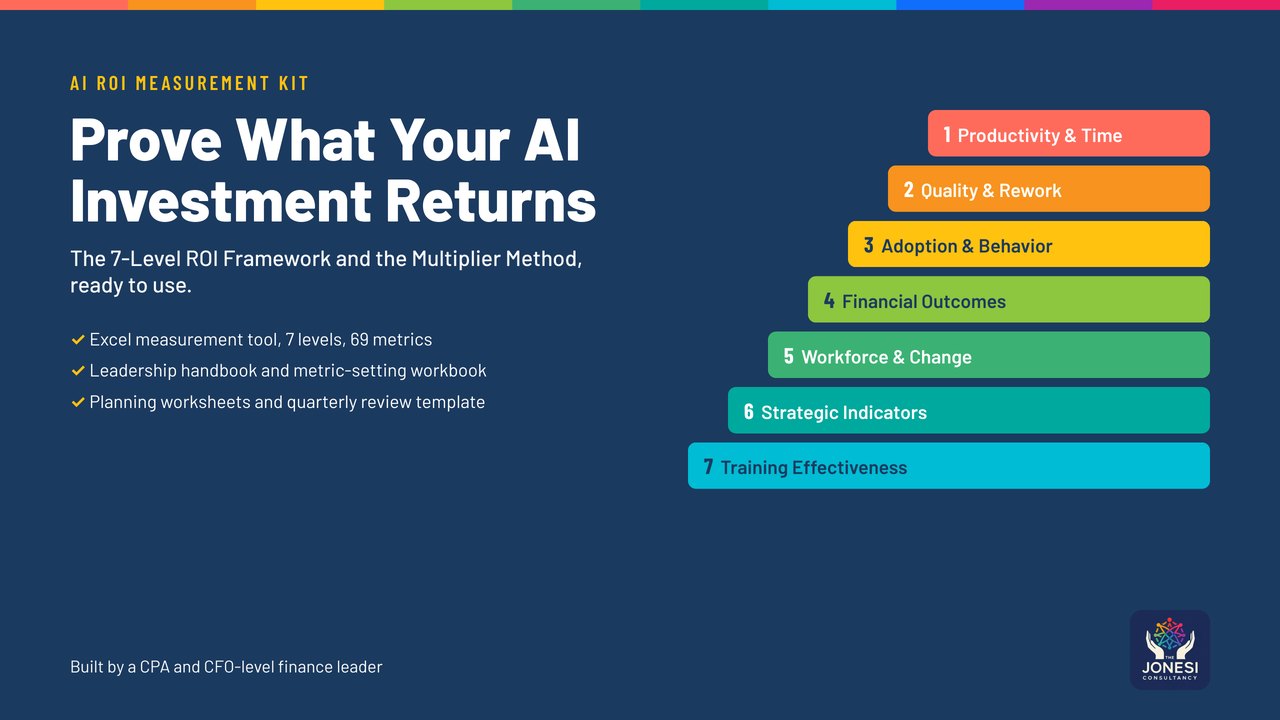
Prove what your AI training and tools actually return, in numbers a CFO will accept. Excel measurement tool, leadership handbook, and five fillable worksheets.
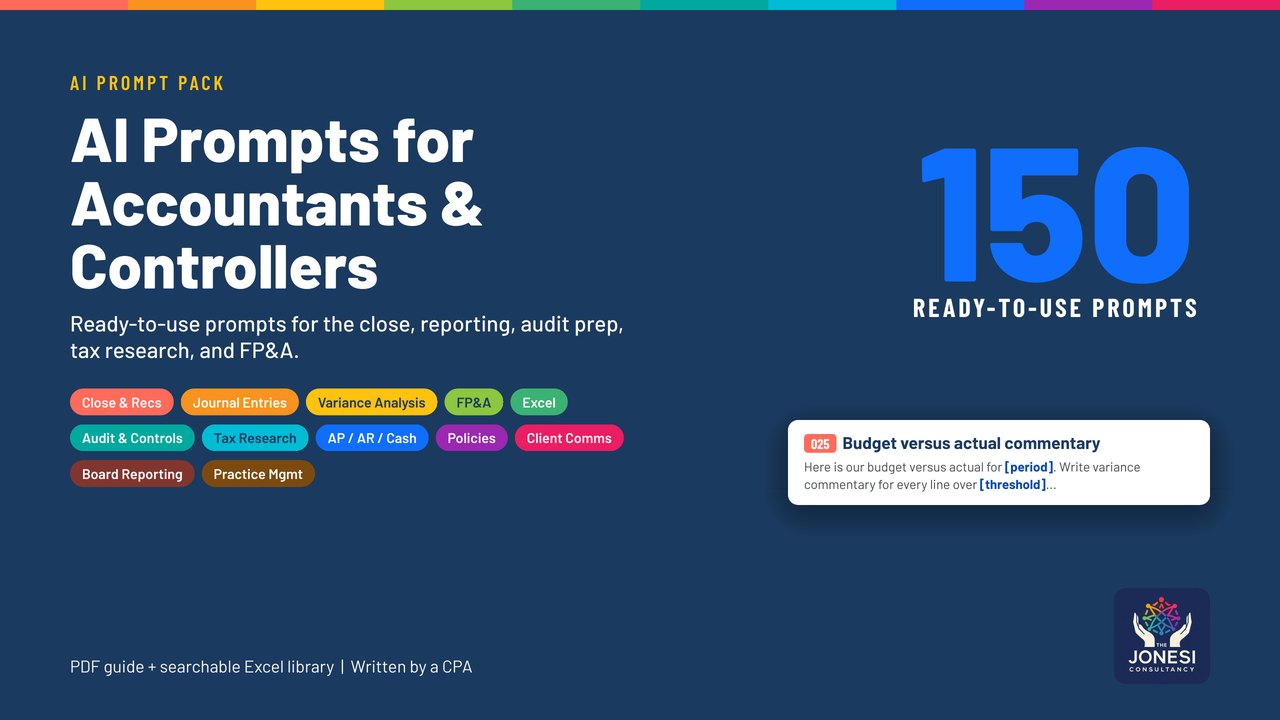
150 ready-to-use prompts for the close, reporting, audit prep, tax research, and FP&A. A PDF guide plus a searchable Excel library.
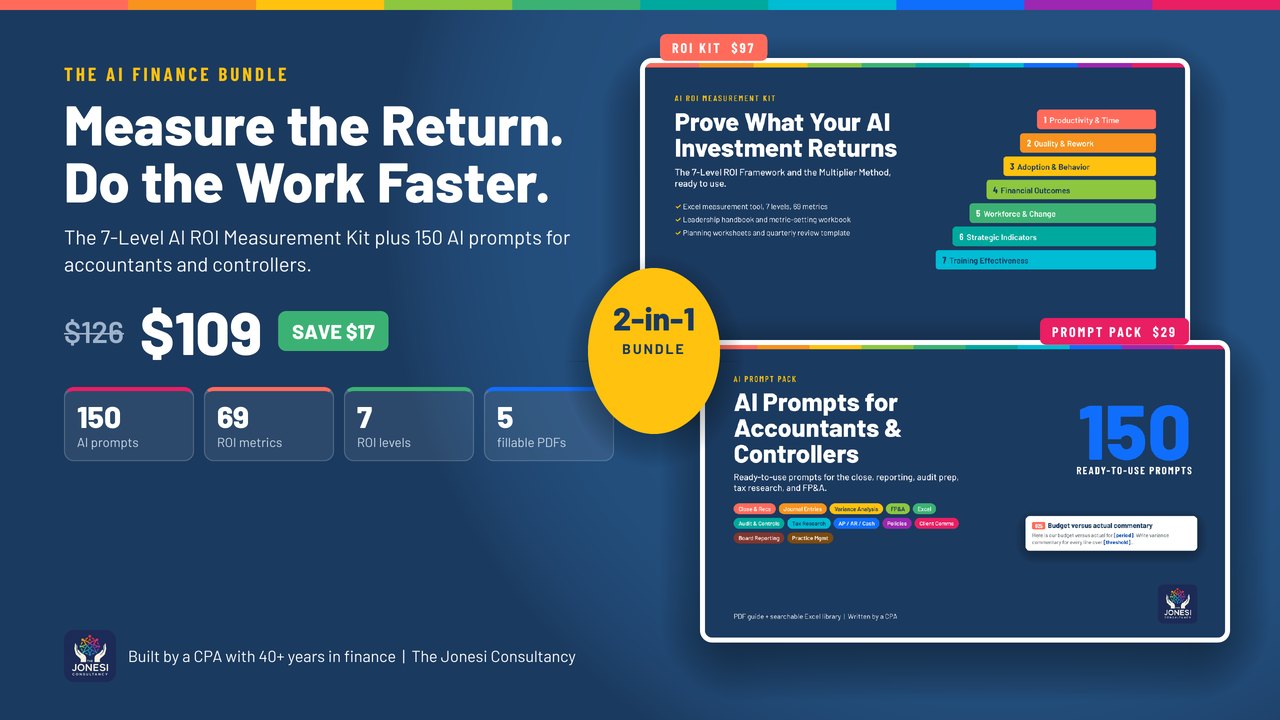
Both toolkits together. Measure what AI returns and do the work faster, for less than buying them separately.
Secure checkout through Gumroad. Questions? Email info@jonesi.us.
Organized in the order most organizations need them. Start at the top if you are early, or jump straight to the category that matches the decision in front of you.
For the leader who suspects they should be doing something about AI and does not yet know where to begin. Start with an honest read on where your organization actually stands.

A structured guide to clarify readiness, goals, and risks before any AI investment is committed.
Warning signs that show up long before anyone calls it a problem, and the three clusters that tell you what kind of problem you have.
Why an organization can be full of people using AI and still have no organizational capability to show for it.
Ten statements, one score, four result bands. A five-minute self-assessment that tells a leadership team where the organization actually stands with AI.
The five stages every organization moves through, the barrier that defines each one, and what happens when a stage gets skipped.
What these tools are, what they can and cannot do, and the language you need to read a proposal critically or hold a vendor to an answer.
Plain definitions and why each term matters to somebody running an organization, plus five vendor phrases worth pushing back on.
Sustainable AI success starts with how people think, not just what they type. A side-by-side case for fluency over technique.
Common beliefs about AI set beside what is actually true, including the ones that turn out to be correct.
What these tools do genuinely well and where they reliably fail, so you can assign work correctly the first time.
The six criteria that should decide what an organization standardizes on. Capability is the last one, deliberately.
Delegation, Description, Discernment, and Diligence. The four skills behind AI fluency, taught with attribution to Anthropic.
Tokens, context windows, training cutoffs, and why these systems produce confident wrong answers. One page, kept beside a monitor.
What actually makes something an agent, why it changes the accountability question, and what to ask a vendor selling one.
A task-based comparison of the major assistants, including where the difference matters and where it does not.
Practical technique for the people who already have access to the tools and want to get better, safer, and faster results from them.
Six before-and-after prompt pairs that show exactly what changes when a vague request becomes a specific one.
Creative ideas for AI use outside the workplace, where the stakes are low and the confidence gets built.
Twenty-five ready-to-run prompts spanning analysis, drafting, review, planning, and decision support.
A curated guide to thirty external courses, prompt libraries, and role guides, each with a note on who it actually suits.
Customizable prompt templates for customer service, administration, healthcare, retail, finance, and field operations.
One strong prompt pulled apart and labelled component by component, with a build-your-own section.
One hundred short prefixes you type at the front of a message to steer how Claude answers, grouped into ten categories from writing to research.
Two columns: the output shape you want and the words that produce it. Built for the edge of a monitor.
Ready-made instructions for getting tables, structured summaries, and clean paste-ready output back.
Design a reusable AI persona so a whole team gets consistent output without everyone learning to prompt.
A decision tree for fixing a disappointing answer: diagnose the symptom, then change one thing.
The recurring prompting problems, their underlying causes, and the fixes that stick.
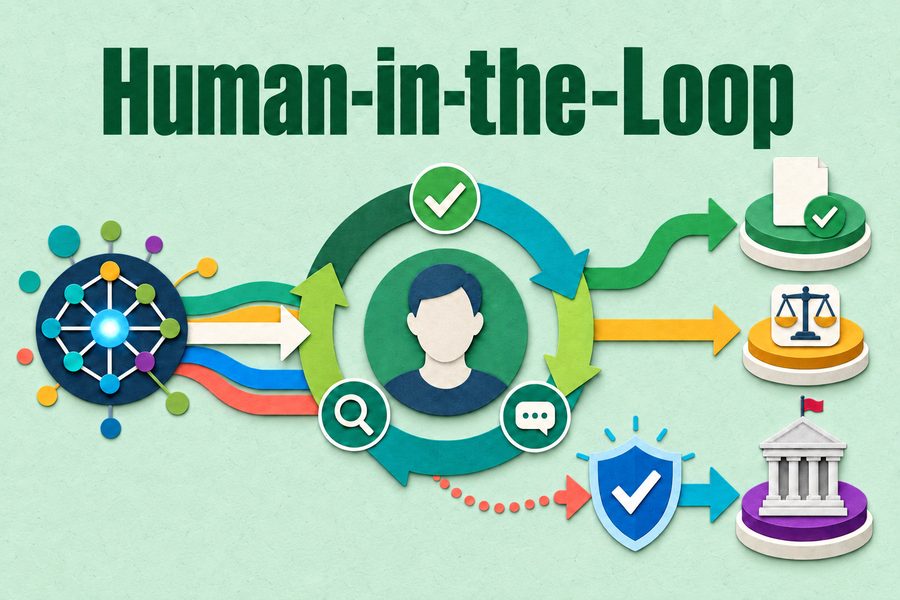
A five-step human-in-the-loop verification discipline you can run on any AI response in under sixty seconds.
Two practical mnemonics that anchor everyday AI use: better prompts in, verified answers out.
Eight reusable prompt structures that transfer to work you have not encountered yet.
Seven habits that make AI writing obvious, and one copy-and-paste instruction that switches all of them off.
How to use AI to write without losing the way you sound, plus the writing you should never delegate.
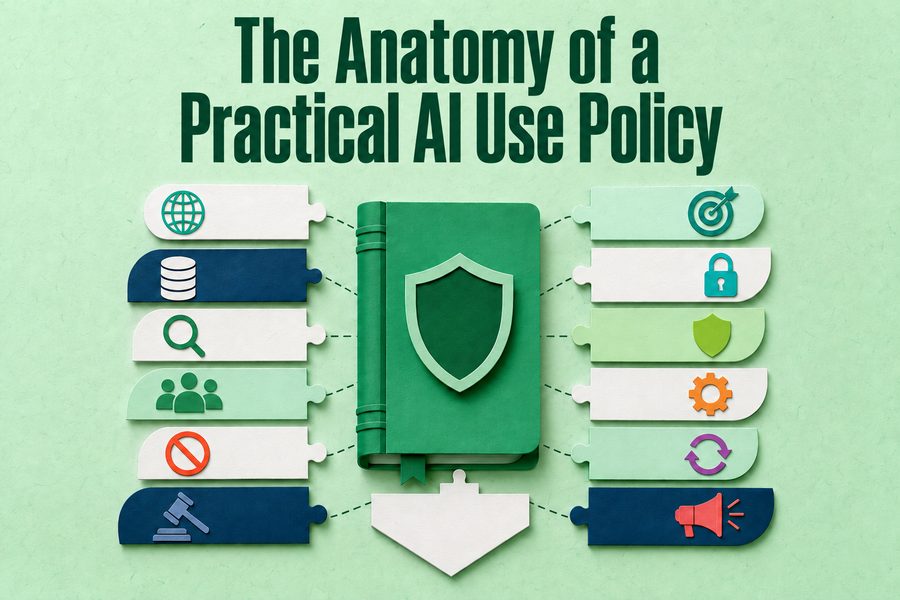
For whoever has been handed the question of what the rules should be. Frame the decisions first, then write the document that records them.
How well-intentioned rules push AI usage somewhere you cannot see it, and how to find out how much of it you already have.
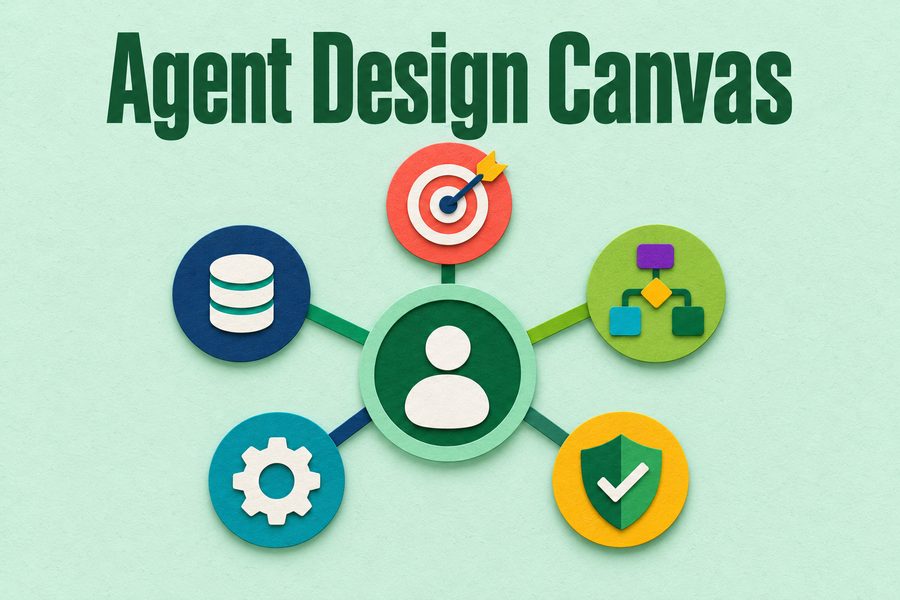
Scope an agent before it is built, including the non-goals section teams skip and later regret.
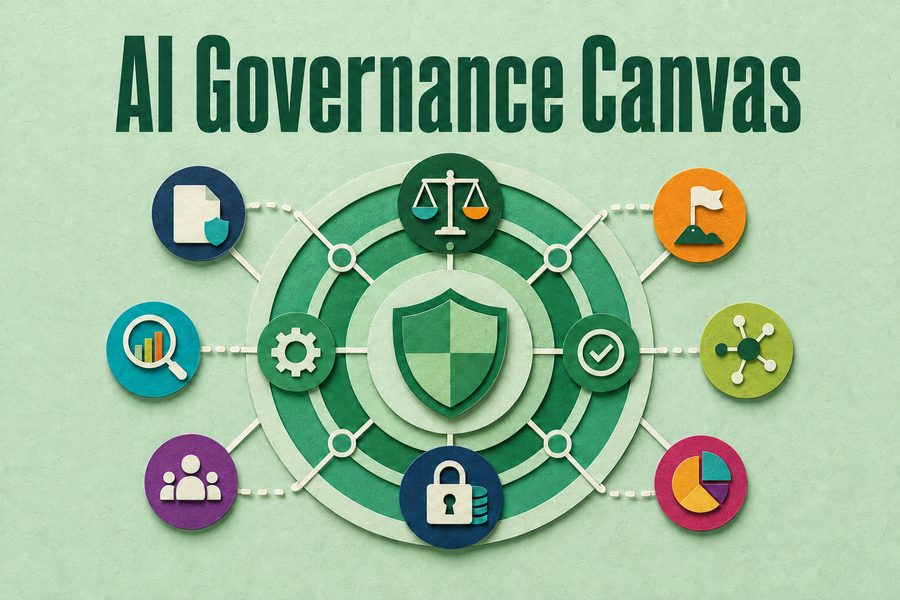
Map your whole governance position on one landscape page in a single working session.
A quarterly test of whether governance exists in practice, written as observable conditions.
Eight questions to answer before you write an AI use policy, plus the governance stack and the policy test.
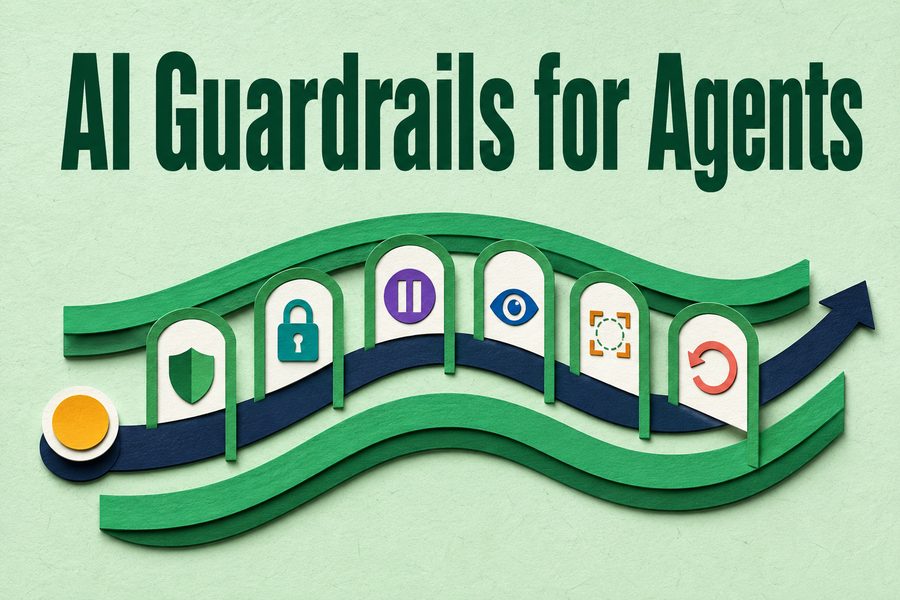
Six controls for software that acts rather than advises, including the one most people never test.
Why fabrication happens, where it concentrates, and a detection routine scaled to the stakes.
The single-page working session that settles the decisions your policy template will record.
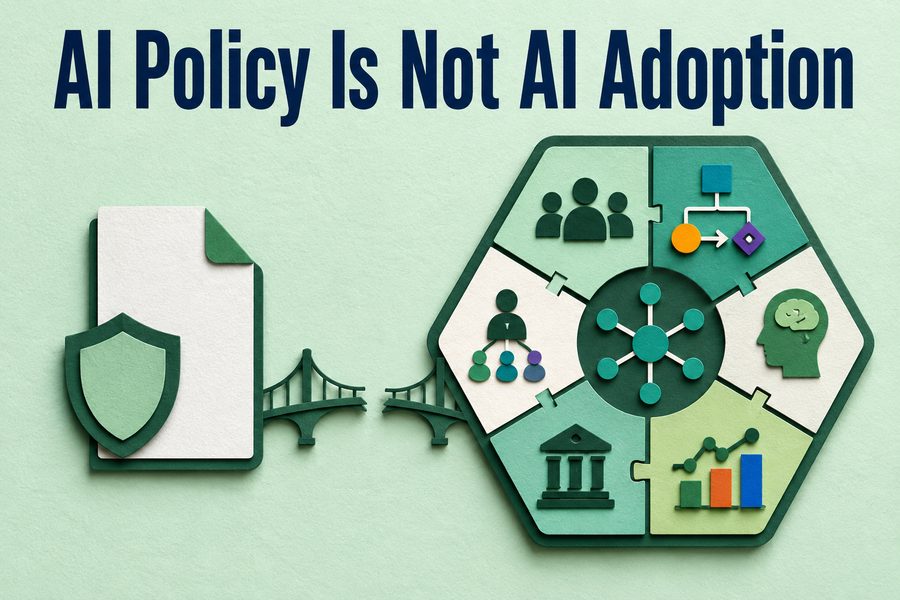
Why the organizations that feel most prepared are often the least ready, and the six layers routinely treated as one.
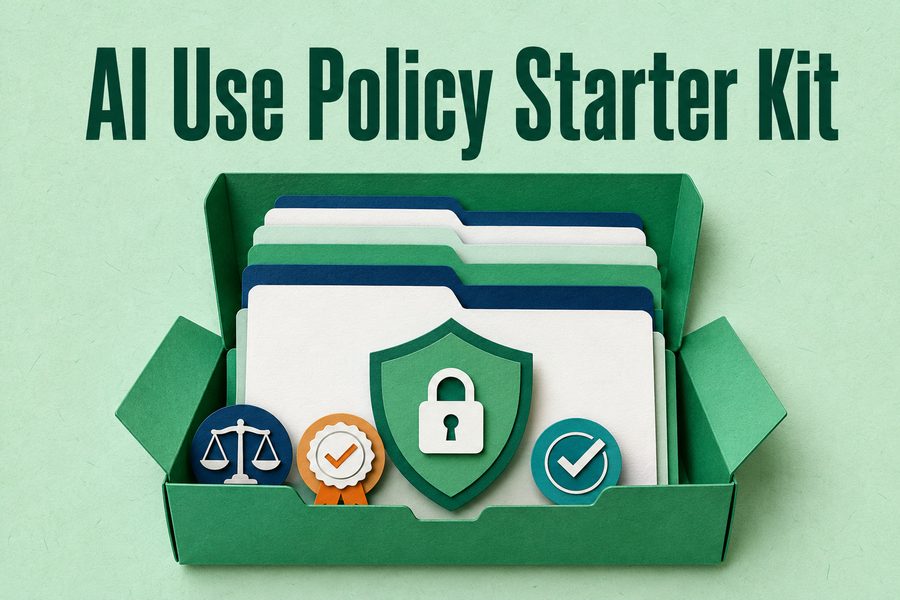
A fill-in-the-blank template with ten sections, suggested language, an acknowledgment page, and a printable verification check.
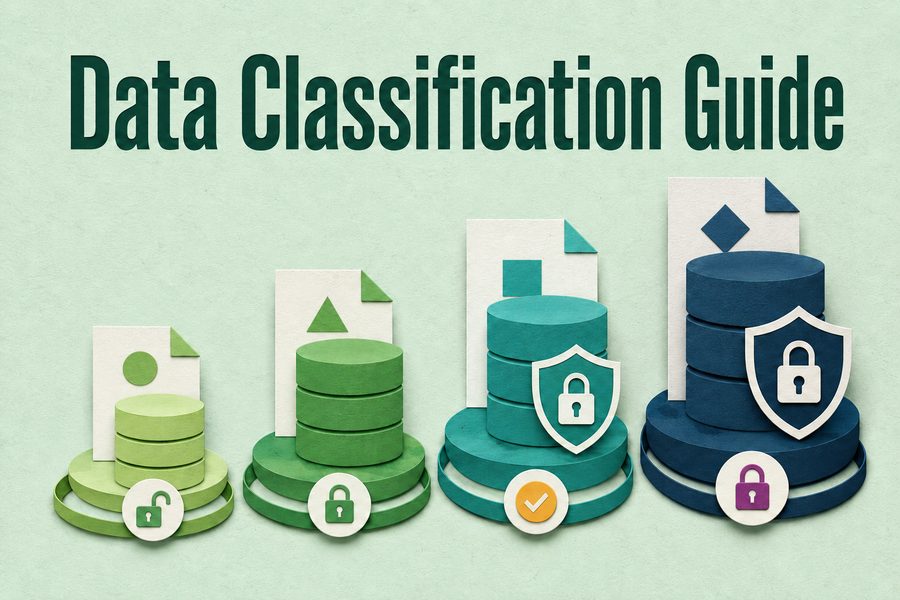
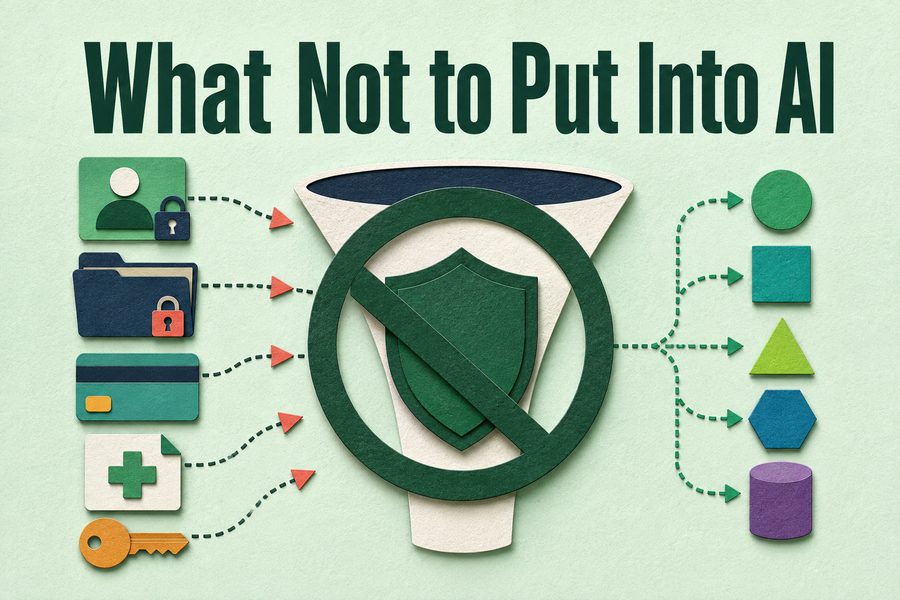
Map your own data categories against permission levels and name who approves each one.
Where human judgment still matters, three levels of stakes, and what review actually has to mean at each one.
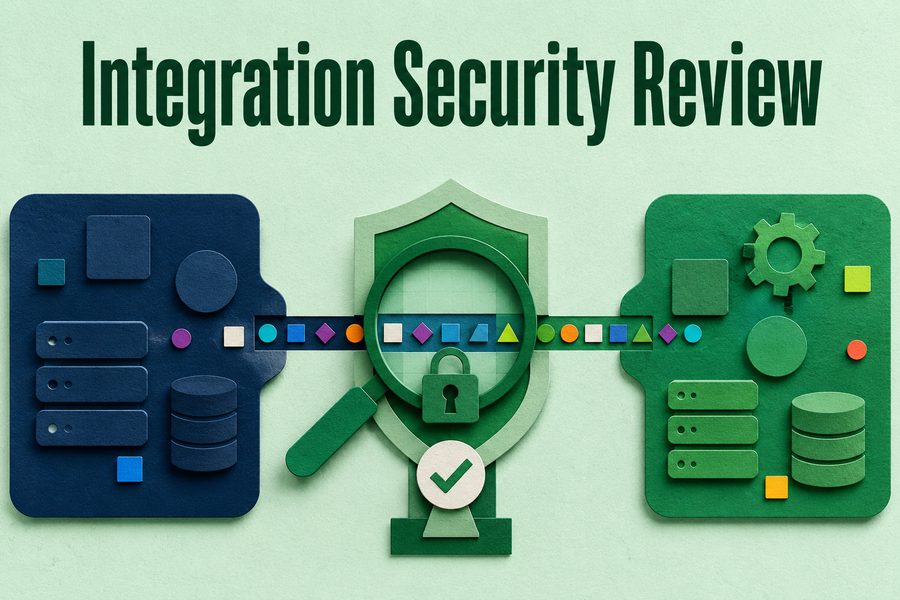
The security questions to put to a vendor before connecting anything to your systems.
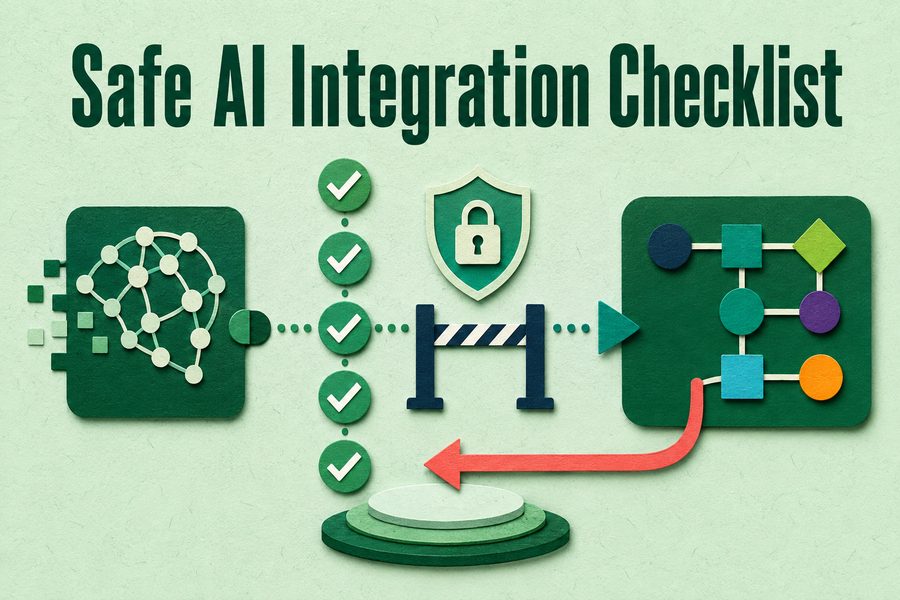
What has to be true before an AI tool touches a live workflow, including how to roll it back.
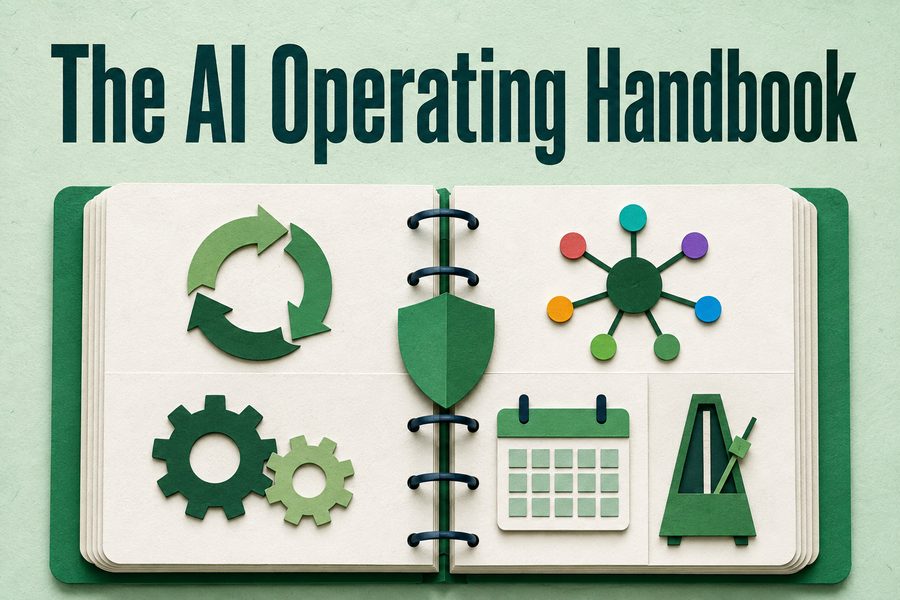
How AI actually runs day to day once the policy exists: routines, decision rights, and rhythm.
Twelve components, what each one has to accomplish, and the common weakness that makes each one fail.
A one-page data rule for everyone who uses these tools. Print it and put it where people can see it.
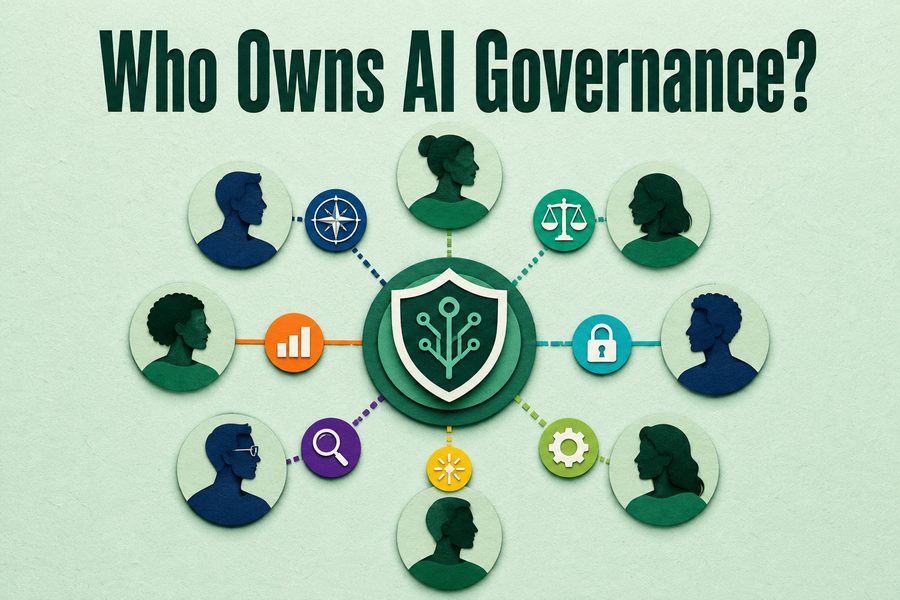
Seven groups, seven different responsibilities, and the assumption that everybody else owns AI.
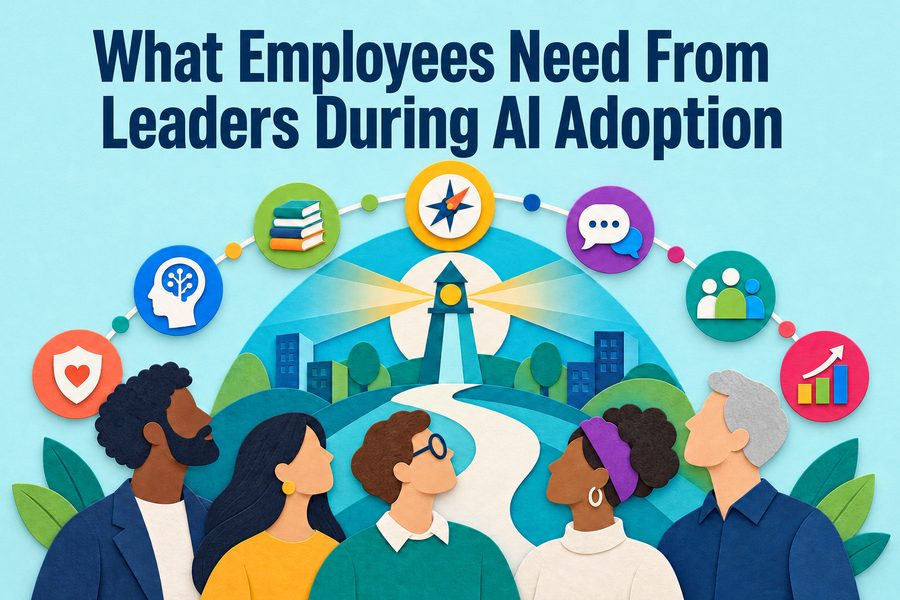
The human half of AI adoption, built by a licensed clinical social worker. What to say, what not to say, and what your people need from you.
Who builds it, who breaks it, and why nothing else works without it. A nine-role matrix covering everyone from the board to the next desk.
What to say when your team asks the hard questions. Six conversations, with the language that works and the language that backfires.
Nine things that decide whether any of this takes hold, and a ten-item leadership self-check scored on evidence rather than intent.
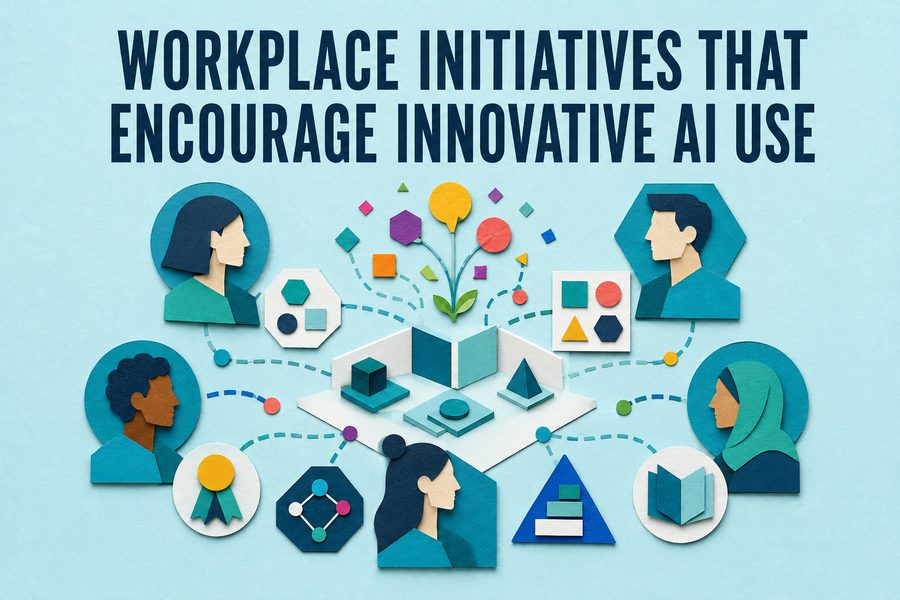
Nine internal initiatives that turn access into adoption, each with recognition mechanisms and the reason it works.
For the person who has to justify the spending, before or after. Purchase discipline, measurement that survives scrutiny, and board-level questions.
Ten questions for directors approving something they cannot evaluate, with what a good answer sounds like and what should concern you.
Why most AI return is undefendable, and the seven questions that have to be settled before any money moves.
Ten questions to answer before the purchase order, eight questions for the vendor, and four honest options including doing nothing.
Sector guidance for nonprofits, foundations, and public-benefit organizations that hold information about the people they serve.
Ten questions for directors who hold a duty of care and a duty to the mission, including where the freed capacity actually went.
Eighteen places to start when you serve people whose privacy you are responsible for, and four places not to.
Guides tell you what to do. Our weekly writing covers what is changing in AI, why adoption stalls, and the questions leaders keep running into along the way.
Read Our InsightsTell us a little about yourself and this document is yours. We don't have an email list. We collect this so we know who's finding our resources useful, and that's it.
You're downloading
this document
Your information is kept confidential and never shared with anyone.