Policy, Governance & Responsible Use Structural Audit Guide

Your AI Policy Has All the Right Sections. Do Any of Them Do Their Job?

The Anatomy of a Practical AI Use Policy

Free PDF Updated The Jonesi Consultancy
Policy Audit AI Policy Structure For Legal & Compliance Checklist
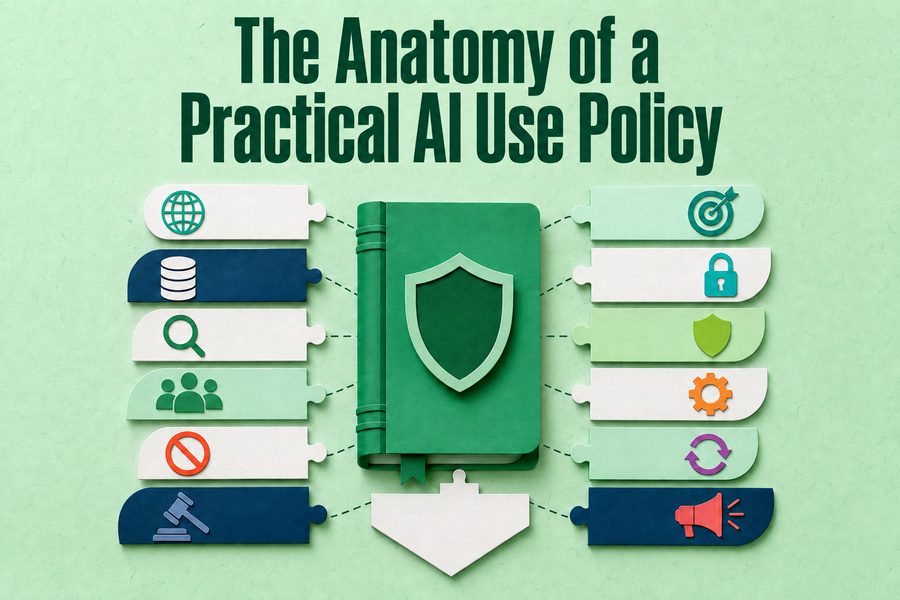
The Anatomy of a Practical AI Use Policy cover image
Download the Free PDF

Free. No email list, no follow-up sequence.

About this resource

What this guide covers

Most AI use policies contain the right sections and still fail to change behavior. The sections are present, correctly titled, and written in language that satisfies a legal review. What is missing is the thing each section was supposed to accomplish. This guide is an anatomy rather than a template: twelve components, what each one has to establish, and the specific weakness that makes each one inert.

Use it to audit a policy you already have, to check whether a draft covers what it needs to, or to know what to ask for when somebody else is writing it. It includes five checks that tell you most of what you need to know about a policy in ten minutes, and a note on the order these components should be decided in, which is not the order they appear in the document. There is deliberately no sample language here, because policy wording that fits your organization comes from decisions your organization has made.

Each one carries the common weakness that makes it fail. Approved tools is the single most commonly missing component, and the one that most reliably produces unsanctioned use.

How to use it

Purpose, and how this will help

If you are auditing rather than writing, start at the bottom of the list. A policy with no named owner, no review date, and no training commitment will not stay accurate however good the first nine components are. The five fast checks exist for the situation where you have been handed a document and ten minutes before the meeting where you are expected to have an opinion about it.

Inside the download

What you'll take away

1

Audit what you have

Twelve components with the weakness that makes each one inert, so you can find yours.

2

Catch the missing tool list

The most common single gap, and the one that most reliably produces shadow AI.

3

Spot the decorative review clause

Why "human review required" with no definition becomes a signature within a month.

4

Add the permitted category

Why a policy listing only prohibitions paralyses your most conscientious staff.

Who this is for

  • Legal and compliance leaders reviewing an existing AI policy
  • Executives handed a draft and asked to approve it
  • HR and operations leaders commissioning a policy from outside
  • Internal auditors and risk committees

Common questions

Frequently asked

What should an AI use policy include?

Twelve components: purpose and scope, approved and prohibited uses, approved tools and approval authority, data and confidentiality expectations, human review requirements, accuracy and verification expectations, bias and appropriate use, disclosure expectations, accountability, incident reporting and escalation, training responsibilities, and ownership with a review cadence.

How do you audit an AI use policy quickly?

Five checks. Search for a specific tool name; if none appears there is no approved list. Look for a category that is explicitly permitted, not just prohibitions. Find the word review and read whether the sentence says what reviewing involves. Look for a person or role named as owner, approver, or incident recipient. Check the date and version history.

Why do AI policies contain the right sections and still fail?

Because a correctly titled section is not the same as a section that accomplishes something. "Employees may use AI responsibly" satisfies a boundaries section and transfers the entire judgment to the individual. "Check for accuracy" satisfies a verification section and tells nobody what to check. The structure passes review while the function is absent.

Download the Free PDF

Free. No email list, no follow-up sequence.

Keep Reading

Related Resources

More from the resource library, chosen because they pair well with this one.