If Software Can Act on Its Own, What Stops It Acting Badly?

AI Guardrails for Agents

Free PDF Updated The Jonesi Consultancy
Agent Guardrails AI Safety For IT & Risk Controls
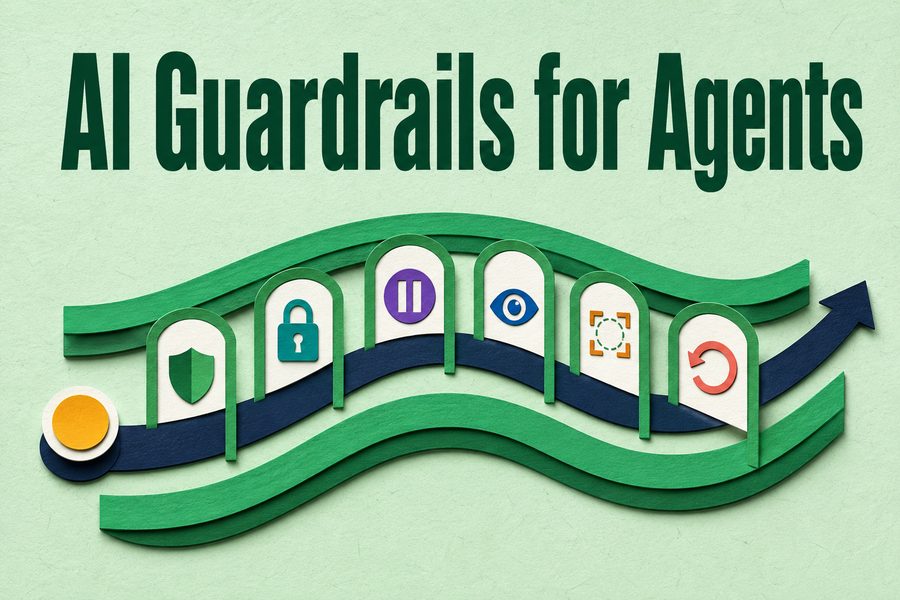
AI Guardrails for Agents cover image
Download the Free PDF

Free. No email list, no follow-up sequence.

About this resource

What this guide covers

An agent that acts is a different governance problem from an assistant that advises, and the controls that work for one do not transfer to the other. Reviewing output before you use it is meaningless when the software already sent the email. This one-page reference covers the guardrails that actually apply to AI agents.

It works through permission scoping so an agent can only reach what it needs, reversibility so mistakes can be undone, spending and volume limits so an error cannot compound, approval gates on the specific actions that warrant them, logging that answers what happened afterward, and a stop mechanism that somebody has actually tested. The framing throughout is that the realistic risk is not an agent going rogue. It is an agent doing exactly what it was told, quickly, at scale.

The risk worth designing against is not rebellion. It is an agent following a flawed instruction faithfully, several hundred times, before anybody looks.

How to use it

Purpose, and how this will help

Apply it before the first agent goes live rather than after the first incident. The highest-value control is the narrowest one: scope permissions so tightly that most failure modes become impossible rather than merely detected. Then test the stop mechanism, because a kill switch nobody has ever used is a belief rather than a control.

Inside the download

What you'll take away

1

Scope the permissions

Give an agent access to what it needs and nothing adjacent.

2

Prefer reversible actions

Draft rather than send, stage rather than commit, propose rather than execute.

3

Set hard limits

Spending, volume, and rate caps so a wrong instruction cannot compound.

4

Place approval gates

On the specific action types that warrant them, not on everything.

Who this is for

  • IT and security leaders evaluating an agentic deployment
  • Risk and compliance leaders assessing exposure
  • Operations leaders automating a workflow
  • Executives approving an agent proposal

Common questions

Frequently asked

What guardrails do AI agents need?

Scoped permissions so the agent can only reach what the task requires, a preference for reversible actions over irreversible ones, hard limits on spending and volume, approval gates on consequential action types, logging that supports an after-the-fact review, and a tested mechanism to stop it.

What is the biggest risk with AI agents?

Not that the agent behaves unpredictably, but that it behaves exactly as instructed when the instruction was wrong. An agent will carry out a flawed instruction faithfully, quickly, and repeatedly, which is why volume limits and reversibility matter more than output quality.

Should AI agents have approval gates?

On specific action types rather than on everything. Gating every action removes the reason for using an agent, and a gate that fires constantly becomes a reflex click within days. Gate what is irreversible, externally visible, or financially material, and let the rest run.

Download the Free PDF

Free. No email list, no follow-up sequence.

Keep Reading

Related Resources

More from the resource library, chosen because they pair well with this one.