Before You Build an Agent, Can You Describe Exactly What It Should Never Do?

Agent Design Canvas

Free PDF Updated The Jonesi Consultancy
Agent Design Scoping Worksheet For Teams Landscape Canvas
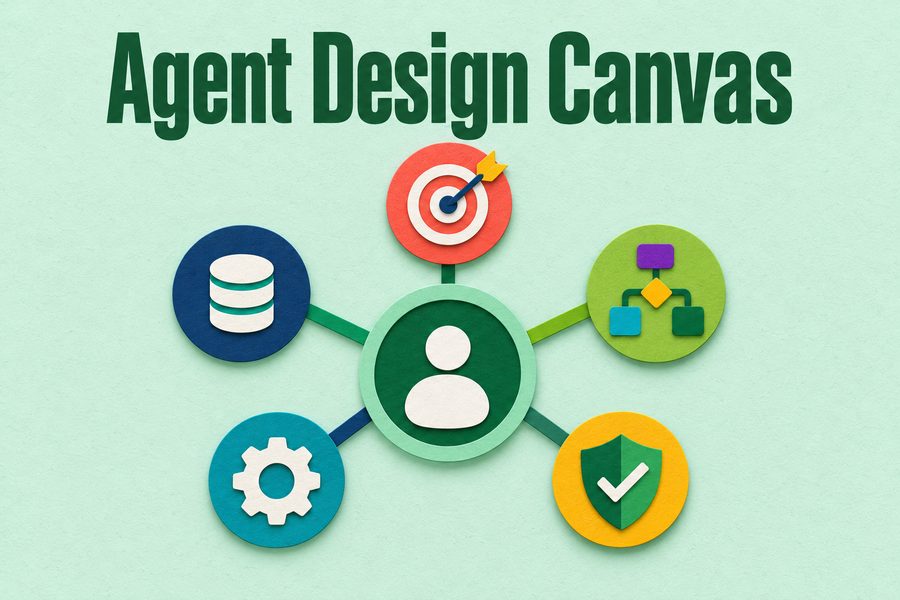
Agent Design Canvas cover image
Download the Free PDF

Free. No email list, no follow-up sequence.

About this resource

What this guide covers

Most agent projects fail at scoping rather than at implementation. The goal was stated loosely, the boundaries were never written down, and nobody specified what should happen when the agent encounters something it was not designed for. All three are cheap to fix on paper and expensive to fix in production.

This landscape canvas walks a team through scoping an AI agent before anything is built: the single goal, the explicit non-goals, the tools and data it needs, where a human must be in the loop, what should happen at each anticipated failure, and how you will know whether it worked. The non-goals section is the one teams skip and the one that most reliably prevents scope drift.

The field teams skip. Writing down what the agent should never do prevents more problems than any amount of specifying what it should.

How to use it

Purpose, and how this will help

Complete it before anything is built, with the person who owns the process in the room rather than only the person building it. Spend the most time on non-goals and failure modes: those two sections are where the disagreements surface, and surfacing them on a worksheet costs an hour while surfacing them in production costs considerably more.

Inside the download

What you'll take away

1

State one goal

Deliberately singular, because multi-purpose agents drift.

2

Write the non-goals

What it must never do, which is the field that prevents the most trouble.

3

List tools and data

Exactly what access it needs, which becomes your permission scope.

4

Place the human checkpoints

Where a person must be involved and what they are actually deciding.

Who this is for

  • Teams scoping their first agentic workflow
  • Operations and process owners automating a task
  • IT leaders translating a business request into requirements
  • Consultants facilitating an automation design session

Common questions

Frequently asked

How do you scope an AI agent?

Start with one goal and write the non-goals explicitly. Then list the tools and data it needs, mark where a human must be in the loop, decide what should happen at each anticipated failure, and define how you will judge whether it worked. Scoping is where agent projects succeed or fail.

What should an AI agent not be allowed to do?

Anything irreversible without human approval, anything financially material beyond a set limit, anything that communicates externally under your organization’s name without review, and anything outside the single goal it was designed for. Writing these down is the point of the exercise.

Do you need a design document for an AI agent?

Something written, yes, though a one-page canvas is usually sufficient and far more likely to be completed than a formal specification. The value is not the artifact. It is that scoping forces disagreements to surface while they are still cheap.

Download the Free PDF

Free. No email list, no follow-up sequence.

Keep Reading

Related Resources

More from the resource library, chosen because they pair well with this one.