Once the Policy Exists, How Does AI Actually Run Day to Day?

The AI Operating Handbook

Free PDF Updated The Jonesi Consultancy
Operating Model Day-to-Day Practice For Operations Handbook
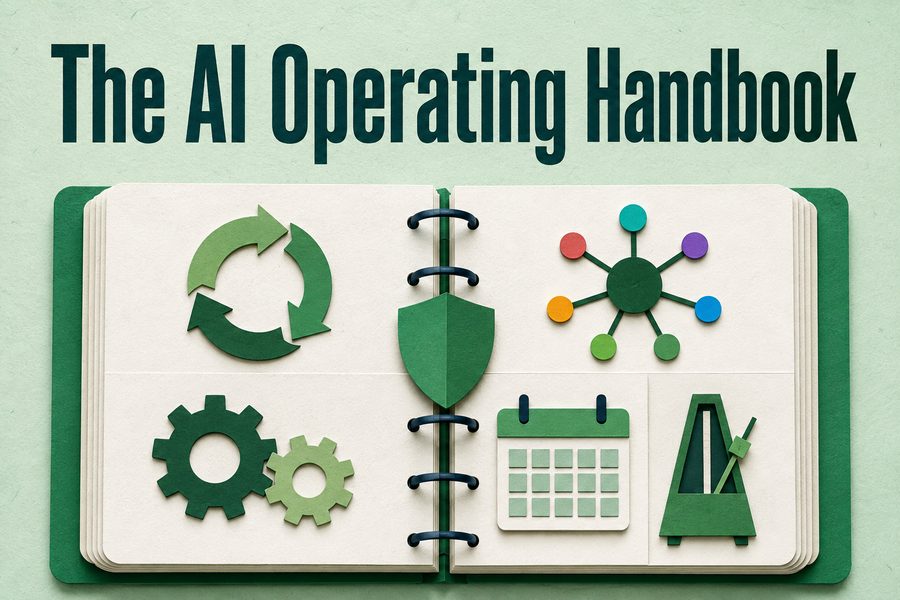
The AI Operating Handbook cover image
Download the Free PDF

Free. No email list, no follow-up sequence.

About this resource

What this guide covers

Governance answers what is allowed. This answers what happens on a Tuesday. The gap between a completed policy and a functioning practice is operational, and it is where most organizations stall: the rules exist, and nobody knows what the routine is.

This handbook covers the AI operating model: the recurring routines that keep practice current, who holds which decision rights day to day, how a request for a new tool or an exception actually moves, what the escalation path looks like in practice rather than on paper, and the operating rhythm, meaning what gets reviewed weekly, monthly, and quarterly. Where the Governance Starter Guide frames decisions, this describes the machine that runs afterward.

Governance answers what is allowed. The operating model answers what happens on an ordinary Tuesday, which is where practice either exists or does not.

How to use it

Purpose, and how this will help

Use it after the policy exists rather than instead of writing one. The most common failure sequence is policy, announcement, silence, and this handbook is aimed squarely at the silence. Start with the request path: if nobody can describe how a new tool gets approved, that single gap explains more stalled adoption than any other operational question.

Inside the download

What you'll take away

1

Establish the routines

The recurring activities that keep practice current rather than decaying.

2

Assign decision rights

Who approves what without escalating, so requests do not queue.

3

Define the request path

How a new tool or an exception actually moves through the organization.

4

Make escalation real

What the path looks like in practice, not on the org chart.

Who this is for

  • Operations leaders responsible for making governance work
  • Governance owners moving from policy to practice
  • Chiefs of staff and business operations teams
  • Managers implementing an organizational AI standard

Common questions

Frequently asked

What is an AI operating model?

The set of routines, decision rights, request paths, and review cadences that determine how AI is actually used day to day. Policy states what is allowed; the operating model determines whether anything happens, and it is the layer most organizations skip.

What is the difference between AI governance and AI operations?

Governance is the decisions: scope, boundaries, data, oversight, ownership. Operations is the machinery that carries those decisions into daily work: who approves a request, how fast, what gets reviewed and when, and where practice is recorded. Good governance with no operating model produces a compliant organization where nothing changes.

What should be reviewed regularly once AI is in use?

Weekly, anything in flight and any incident. Monthly, the approved tool list, pending requests, and usage patterns. Quarterly, evidence of outcomes, workforce sentiment, and whether the policy still matches practice. The quarterly evidence review is the one that keeps a programme defensible.

Download the Free PDF

Free. No email list, no follow-up sequence.

Keep Reading

Related Resources

More from the resource library, chosen because they pair well with this one.